Biosolids are nutrient-rich soil-like material created when sewage from homes and businesses is cleaned at wastewater treatment plants. During treatment, the solids are separated from water and go through processes that remove harmful germs. The result is a safe, natural fertilizer that can be used by farmers, ranchers, and land managers to boost crop yields, improve soil quality, reduce the need for water, eliminate the need for synthetic fertilizers, and help fight climate change.
Biosolids are strictly regulated and must meet protective Environmental Protection Agency (EPA) and California environmental requirements.
Benefits of Biosolids
Biosolids are a powerful natural resource that have benefits for the planet and people. Biosolids help:
Enhance soil health
- Biosolids return nutrients and organic matter to soil that would otherwise go to a landfill.
- Biosolids improve soil structure which helps it to retain water and nutrients, making the land more resilient to erosion and drought.
Grow better crops
- By adding nutrients and improving soil quality, biosolids increase crop quality and farm yields.
- Biosolids supply all essential nutrients crops and plants need, including nitrogen and phosphorus.

Fight Climate Change
- Biosolids contain significant amounts of carbon-rich organic matter that gets trapped in the land, versus warming the planet in the atmosphere.
- Biosolids replace the need for synthetic fertilizers, which require an intense amount of fossil fuels for production.
- The most common biosolids treatment process, anaerobic digestion, naturally produces methane gas, which can be captured and used as a 100% renewable energy source.

Reclaim depleted land
- When applied to land ravaged by wildfires and mining operations, biosolids replenish nutrients and improve soil health, encouraging plant re-growth and stabilizing slopes.
Lower costs and improve profits for farmers
- As a low-cost alternative to synthetic fertilizers, biosolids provide cost savings to farmers, ranchers, and land-managers and improve profits by increasing yields.
How are Biosolids made?
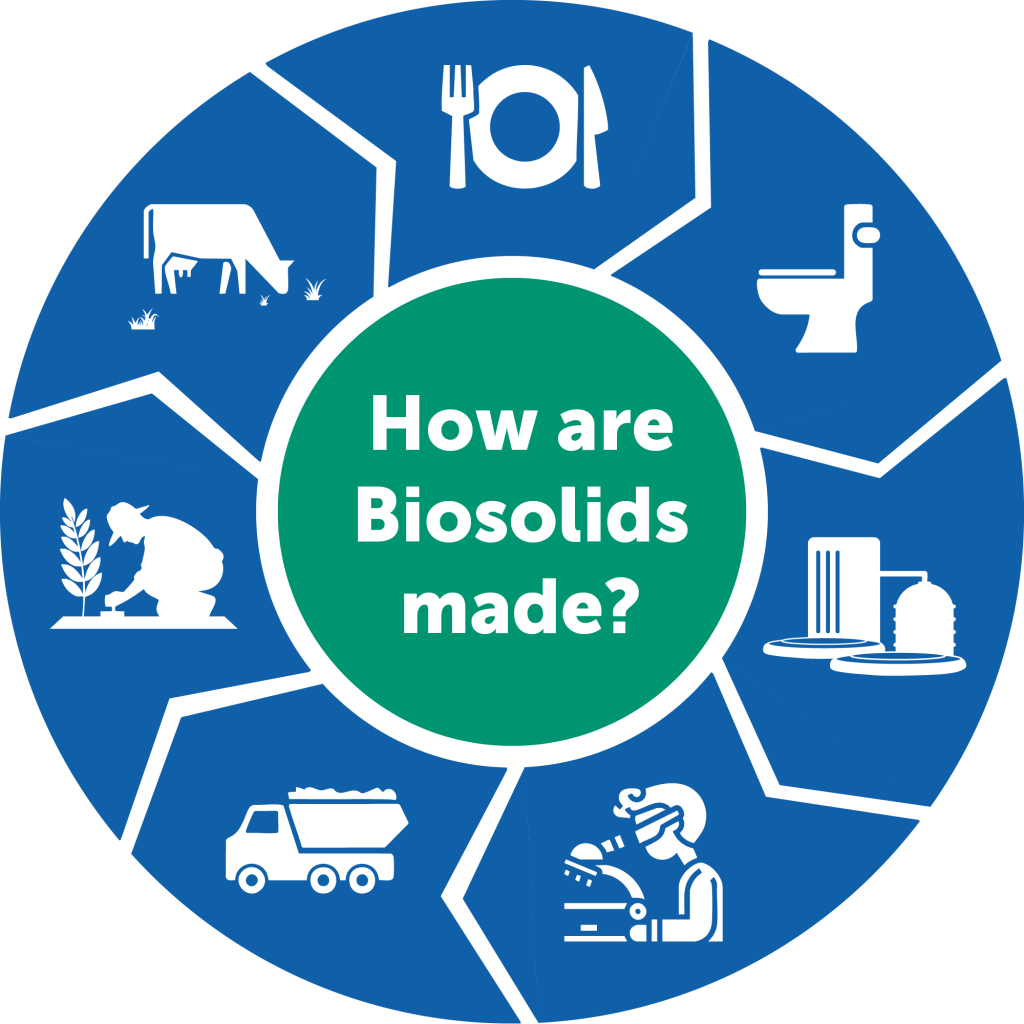
Biosolids turn “waste” into a valuable resource, eliminating the need for synthetic fertilizer, and returning nutrients to the soil.
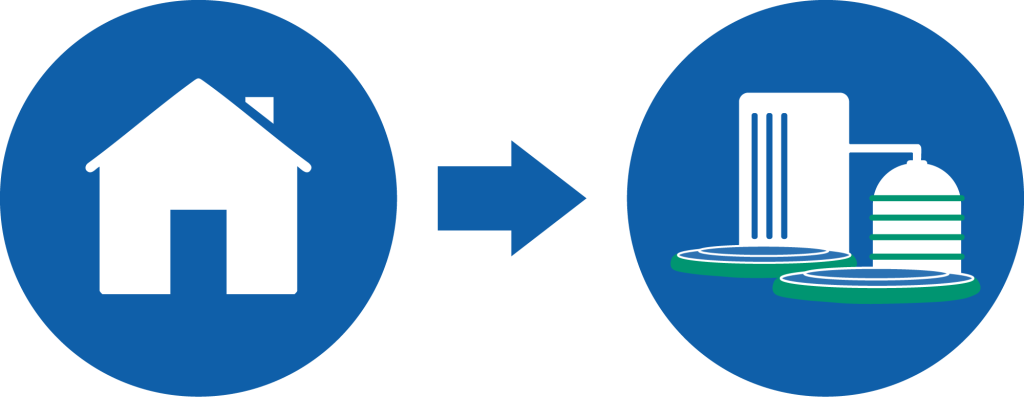
From your Home to a Wastewater Treatment Plant
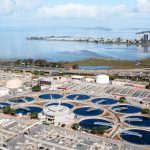
The cycle starts with the food we eat. What our bodies don’t use gets flushed down the toilet and travels through sewer systems to a wastewater treatment plant. At the treatment plant, solids are separated from wastewater. The wastewater is cleaned and safely reused or released to local waterways.
The solids go through treatment processes to kill disease-causing organisms and break down pollutants. One example of this is heat-treatment in large tanks called anaerobic digesters, where microorganisms break down the solids. The result is a safe, nutrient-rich soil-like resource called biosolids.
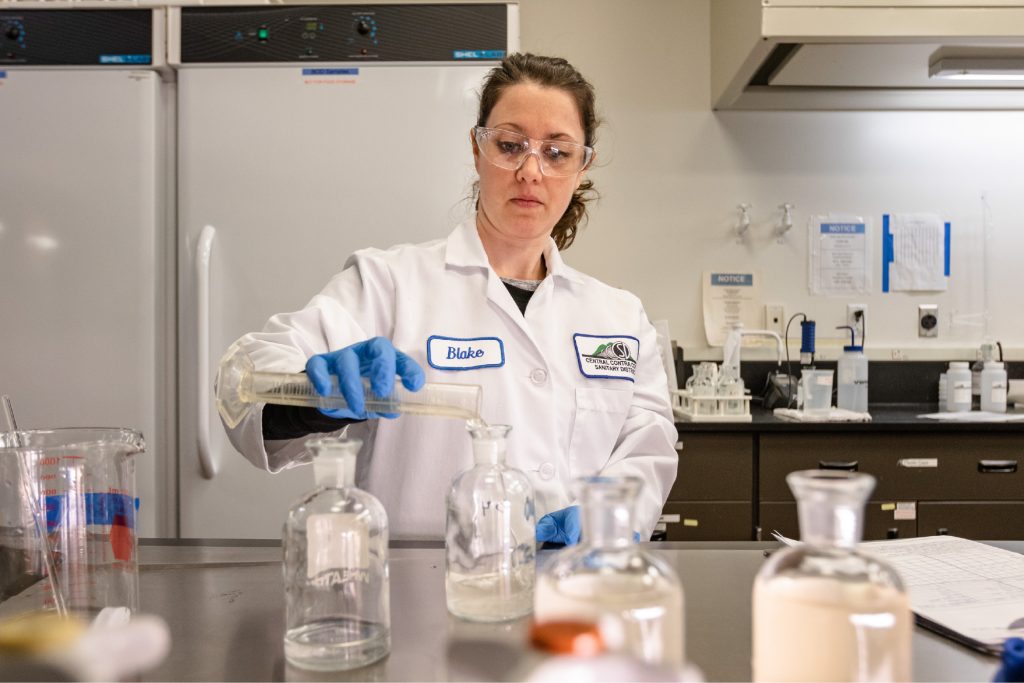
Biosolids are closely monitored through laboratory testing to make sure they meet strict health and safety standards.
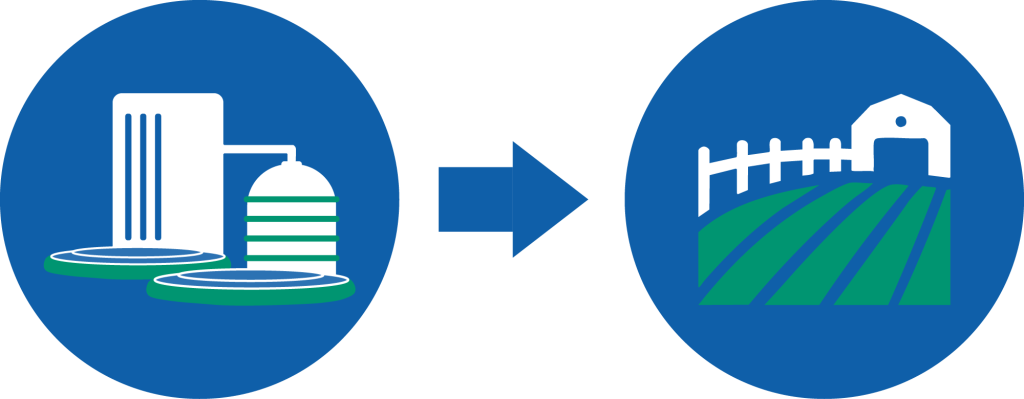
From the Treatment Plant to Farmland
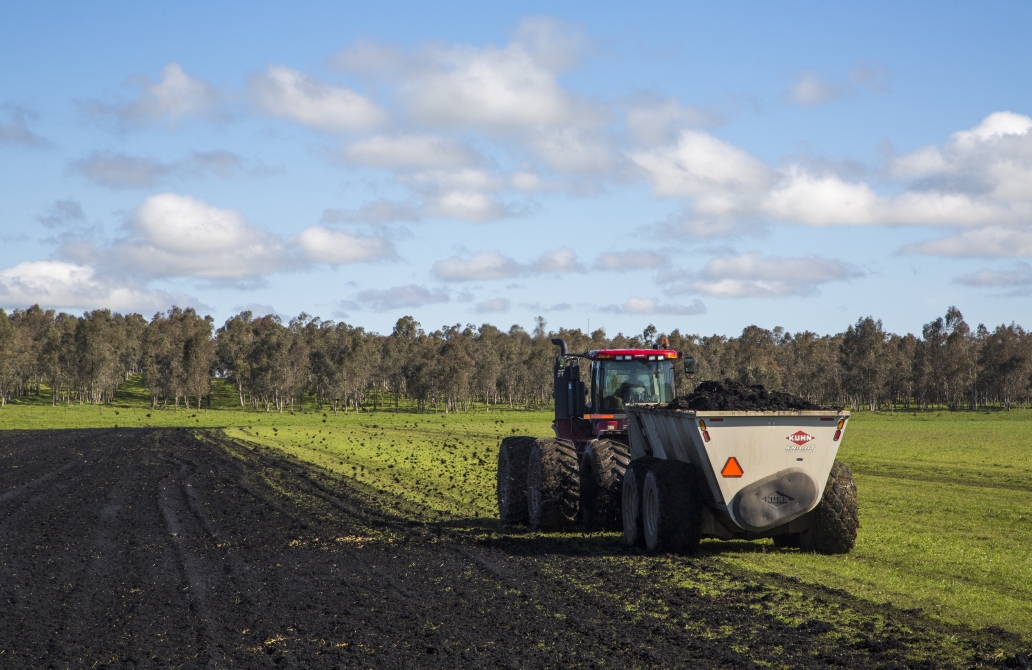
Biosolids are transported to farmers as a more sustainable alternative to chemical fertilizers. In California, typical crops grown with biosolids are hay and forage grasses. These crops are used to feed animals, which create food for humans… and the cycle begins.
Biosolids are Not Poop!
Your poop is the raw material that ends up at a wastewater treatment plant. Biosolids are what your poop becomes after it’s treated and meets strict safety regulations.
Are biosolids safe?
Yes. The safety of biosolids has been studied for more than 50 years and is supported by research from the Environmental Protection Agency (EPA), United States Department of Agriculture (USDA), the U.S. Food and Drug Administration (FDA) and top universities across the United States and Canada. Biosolids are always tested to confirm they meet federal and state requirements for safety. They are regulated much more intensely than synthetic fertilizers, manure, and compost. Today, in California, approximately two thirds of biosolids that are created are applied to soils, and they have been widely used on farms and other lands across the U.S. for decades.
There are many misconceptions about the safety of biosolids. Here are the facts:
Biosolids DO NOT contain high levels of heavy metals
California’s mandatory pre-treatment programs prevent industries and manufacturing facilities from discharging harmful amounts of metals into sewers. The metal content of biosolids is typically very low. The concentration of heavy metals in biosolids is similar to that found in natural soil, manure, or compost.
Biosolids DO NOT contain harmful levels of pharmaceuticals
The majority of pharmaceuticals in wastewater are broken down during the treatment process. Research and risk analysis demonstrate that it would take many lifetimes of working with biosolids to equal everyday exposure to many common products.
Biosolids ARE NOT a main source of exposure to Per- and polyfluoroalkyl (PFAS)
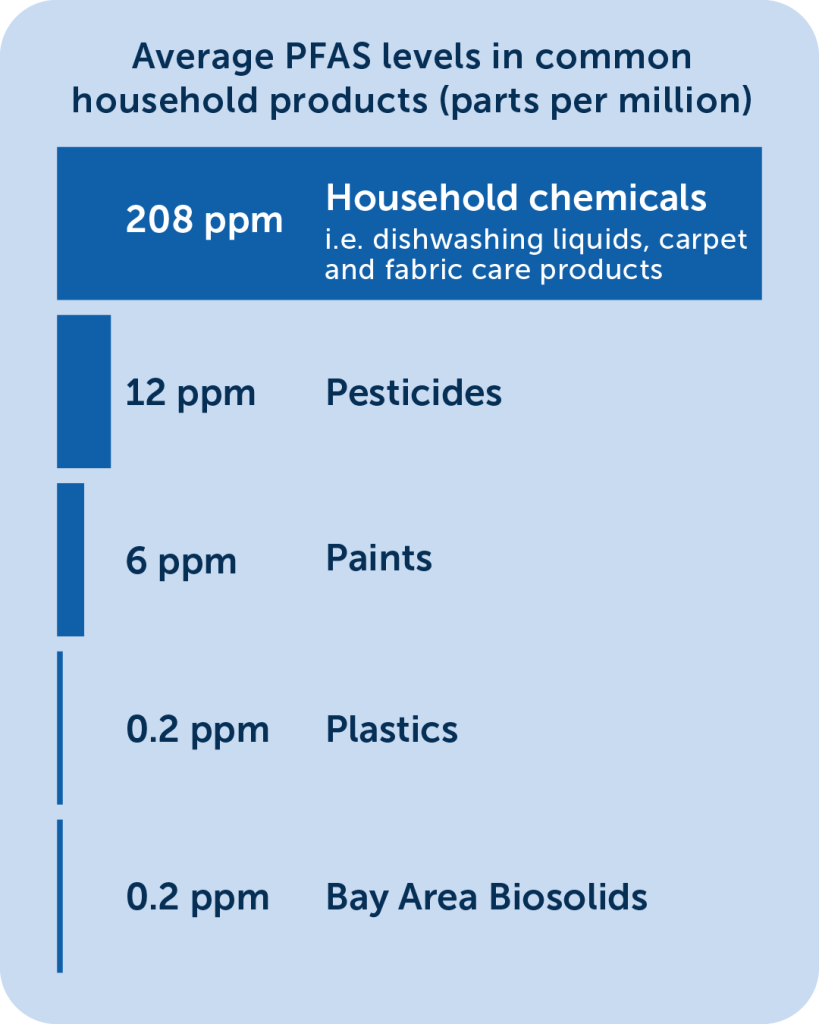
The amount of PFAS found in Bay Area biosolids is very low. PFAS are a class of harmful chemicals found in an abundance of household products we use everyday. PFAS are so common in our environment and the products we interact with, that studies have shown that virtually all adults have PFAS in their blood. Unfortunately because of this, they end up in our wastewater system and therefore can be found in trace amounts in biosolids.
Human exposure to PFAS comes mainly from everyday household products like non-stick cookware and waterproof and stain-resistant textiles, not biosolids. The FDA has not found PFAS in 97% of food samples (both fresh and processed) since it started testing for them in 2019. Only two out of 3,200 meat and poultry samples tested by the USDA had detectable levels of PFAS.
In some parts of the United States, a few wastewater treatment facilities have been found to have higher levels of PFAS due to manufacturing facilities in those communities. Primary PFAS manufacturing facilities are not located in the Bay Area. Below is a graphic showing relative amounts of the PFAS chemicals measured in various substances, including Bay Area biosolids. Biosolids have far less PFAS in them than many common household products you may use on a regular basis.
BACWA and our member agencies are working hard to reduce PFAS entering the wastewater system in the first place by reducing PFAS at the source: we are advocating for the regulation of the industries that are producing products with PFAS.
You can help! By making informed decisions about the kinds of products you buy and use at home, you can reduce the amount of PFAS that gets washed down the drain and encourage industry to not use these harmful chemicals. Look for PFAS-free labels when you shop. Here are tips for finding PFAS free products.
Another way you can help is to ask your state and federal elected leaders to ensure that the “polluter pays” when it comes to addressing PFAS, so that the companies that manufacture and profit from PFAS are the ones that bear the cost of PFAS cleanup, not your local utility or you as a customer. The California Product Stewardship Council is a good resource to learn more.
The Bottom Line on Biosolids
Clean water agencies are among our community’s biggest protectors of health and the environment. They work 24/7 to protect your health, reduce waste, and keep our Bay and waterways clean.
Biosolids are a useful byproduct of the wastewater treatment process. Instead of creating waste that must be disposed of, we create a nutrient-rich product that brings many benefits to communities. Biosolids are safe, effective, and sustainable.